

Let’s not go in any well defined format to write about this movie , This movie explores the very simple and the things we observe daily in our family , society and circles , Patriarchy is deep rooted in our society and it is well known and talked about that. We often ourselves ignore the fact of gender biasness and approve that in not so very subtle way , Teaching social and gender biasness from the infancy to grown up. This also explores the idea of Toxic Marriage and it’s burden on female menatal and physical health and how many fail ko acknowledge that and continue that as it is .
Feminism and the level of education is not enough to safeguard all . One can have a PHD and still be a normal housewife without acknowleding much thinking husband and family are their sole duty while men bear no burden in that . 
The Burden of Domesticity
Richa Played by Brillaint Sanya Malhotra is a well trained dancer and choreographer who wants to focus on her passion . She seems eager and is enjoying that aspect of her life and wants to grow further.Nobody in her family or somewhere didn’t force her to this marriage as shown in the movie , what the movie didn’t dared to show is the constant bomabardment of marriage proposals and questions from everyone near her suggesting that it is her time for marriage.Believe me , It happens a lot in that age period and many will relate with that.She saw a prospect of stability and progressive mindset in such well educated Family , Father education level is not suggested intentionally in the movie , while the mother and son are Phd holder in economics and MBBS doctor respectively . They have a preety good image across society but They are pathetic in their old nostalgic traditions , hypocrisy and caste based discriminations as suggested by the dialogue between maid and sanya’s character.
Richa’s experience is not an isolated one.Many educated women find themselves grappling with the drudgery of household chores post marriage,and are told to supress their education , personal aspirations become secondary to their role as a daughter in law.
The household chores cleaning , washing utenlis , and even dealing with something as trivial as a leaking tap are left entirely to the woman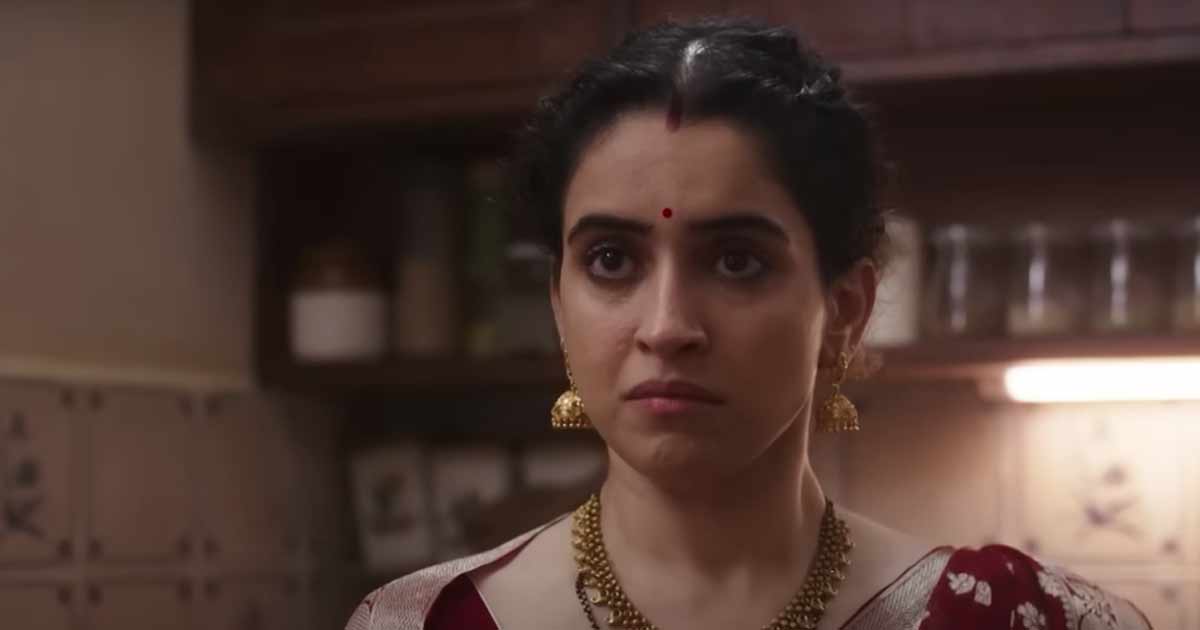
The Leaking Tap Symbolism
The leaking Tap symbolism is a literal representation of patience level of sanya’s character Richa. When She was first married ,We don’t hear about the problem of leaking tap , The movie hints at that but shows the problem when few days have passed and she is about to be alone handling all household chores .We see that she is trying to replace that , fix with anything and complain to her husband about that issue but nope , no one listens to her , Indicating that she isn’t being heard , she tries to fix herself and the symbolism of leaked Pipe On successive request her request for that fix isn’t being heard.
Then we see her holding that tap water , But the film shows us gradual increase in that throughout the movie to make us viewer discomfort and feel for her , when the bucket fills ,We get the feeling that her patience level is also filled up and she should go , Some might criticise the action of her giving dirty water to guests and throwing the bucket water towards her husband and father-in-law but It tested the viewer’s patience along with Richa’s and that was a moment of relief portrayed beautifully through that scene . The OG malyalam film does better at portraying that frustration but this was no doubt less . Some part of me feels that they tried to play a bit safe Hey, Did you realise men are never shown inside the kitchen in this movie , This is purely intentional and very implied that men’s duty are not in kitchen when they cook. When women are cooking they will have to manage all things but they cook for mens of the house first and then for themselves.They need to be validated by the mens of the house .But the movie beautifully showcases that mens of houses never appreciated the efforts of Richa in cooking . Cooking was never her main skill though she learned through her ways but never got appreciated.This led to her being frustrated and seeking for more while the men of houses enjoyed her efforts.
A Hierarchy in Every Meal
The Prioritization of men in matters as basic as eating is a relic of arhaic patriarchial customs that continue to shape gender roles today.Women are expected to embody patience , selfessness , and endurance , while men grow up believing that their convenience is a given 
Patriarchy Beyond the Wife : The Mother-in-Law’s Role
Intrestingly , the mother-in-law in this household-once a victim of the same opressive system-ends up reinforcing it . Look how the daughter tells her mother she needs rest and wants mom with her to take care during pregnancy without asking her too much , She is the caregiver for generations , her mom , mother-in-law,daughter, grandaughter , generations ; often at the cost of their own well-being. The generational cycle of enforcing gender biased roles ensures that patriarchy doesn’t not crumble and fall easily.The mother-in-law , despite knowing the struggles of being a daughter in law , doesn’t intervene to ease Richa’s burdens.Instead , she perpetuates the same roles she was once forced into , thus unknowinglt becoming an loyal agent to the system that opressed and manipulated her. 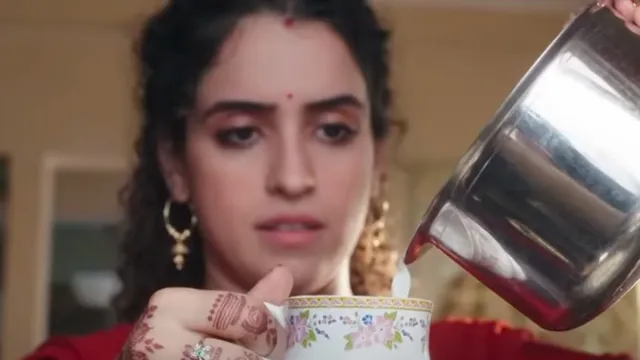
The Deep-Rooted Nature of Patriarchy in the Indian Subcontinent
The experience of Richa and countless other women reflect the ingrained patriachal identity that governs many households in the indian subcontinent.Even in educated and seemingly progressive families , the traditional division of gender roles persists , often justified in the name of ‘culture’ and ‘respect’.
Stifling Dreams: The Suppression of a Woman’s Passion
The movie tells us that Richa is an accomplished dancer , shows us visually and reminds us repeatidly. She wishes to continue her passion even after marriage.However,her dreams are quickly crushed by the mens in the house. Her husband even feels ashamed that his wife is a dancer and even commands her to delete those videos of her dancing.
The acts of supressions from the mens of the house is not just about dance or career; it is about control.A woman’s personal choice, ambitions, and self-expressions are often deemed secondary to a man’s reputation and societal acceptance.By taking away Richa’s right to dance , the family ensures that she remains “ideal wife” and financially dependent and be manipulated into thinking that her primary duty is to serve and remain invisivible in the public domain We get to see the moment when richa tries to make chutney in silauta , but she feels pain and irritation because she wasn’t used to this and then when she for simplicity uses mixture, her father in law subtly tells that he doesn’t prefer mixture’s chutney and takes a dig at her . In previous scenes , her mother in law tells that silauta feeds enzymes to the chutney and then makes taste better.
Let me tell you a short story here
In a village a pandit had kept a kitten , his son was small , when there used to be some tradition the father pandit used to tie the kitten nearby becasue puja items touched by kitten would be considered unholy , his son saw this happen regularly and when the father pandit died , the responsibility fell to the pandit son , he used to search for kitten from far away , tie nearby and then do the rituals ,
I can assure you without knowing much the husband will follow the father-in-law route
Love Versus Duty: The Dehumanization of Intimacy
Richa’s Struggle doesn’t end with household chores or career supression; it extends to her marital bed.While She desires emotional connection and passionate intimacy with her partner , he views sex as a mechanical duty solely for the purpose of conception.Her desires and needs are disregarded , as the act becomes a means to fulfill a patriachal expectation -producing an heir.
This kind of marital relationships often fosters emotional alienation , making marriage more of an obligation than a true partnership.
Questions to tackle after this movie
- “Why is this generation so sensitive to such minor things?”
- Previous generation suffered and we can’t pass the torch again forward
“Why can’t she just adjust like everyone else?” -Let the men of the house adjust in food by letting her, why should she adjust if that means sacrifice ,
“She can’t even handle simple household work; how will she manage a job?”
-yeah if so easy then why aren’t man shown once inside a kitchen , the time they were making food , first they ordered all things to be ready and still made the kitchen a mess , 4. “Isn’t it a wife’s duty to take care of her husband and his family?”
-Is it , do you consider unpaid labor at home a woman’s responsibility but a man’s contribution is measured only in financial terms
“If she didn’t want to cook and clean, why did she get married?”
-So you mean marriage means hiring a free lifetime maid?“Why does she have to make a big deal out of everything?”
-Standing up for one’s dignity and mental peace and well being is “making a big deal,” ,but suffering silently is seen as a virtue?.“Isn’t feminism about equality? Why do women want special treatment?”
-Then do all equally , household chores , work , children , comeon“Why did she have to disrespect her husband and in-laws like that?”
-oh , Standing up for oneself is “disrepectful”, but systematic opression isn’t considered disrespect?“Why didn’t she speak up earlier instead of making a scene?”
-Comeon , Think about this dude , Why do people only notice oppression when women finally snap?“Isn’t this just a normal family life? Why is she acting like a victim?”
- If a system normalizes inequality and emotional abuse, should we accept like that silbatta joke or let’s change?
- “Our mothers and grandmothers did all this without complaining; why is she struggling?”
- Should we continue suffering just because previous generations did?
- “If she was so independent, why did she marry in the first place?”
- I believe in marriage, Can’t marriage be a partnership instead of a prison?
- “Why does she expect her husband to help in the kitchen? That’s a woman’s job.”
- Why is cooking a“woman’s job” at home but a respected profession for men in hotels and restaurants?
- “If she was unhappy, why didn’t she just leave earlier?”
- Why is leaving an unhappy marriage seen as selfish?
- “Doesn’t a successful marriage require sacrifice? Why couldn’t she compromise?”
- Why is sacrifice always expected from the woman?
Honest Internet Questions asked by people
“Why do feminists hate cooking and serving at home, but not in restaurants or airlines?”
-No one ever said feminists hate cooking for a family . The issue isn’t cooking it’s expecting only women to do it for free while men get served , If cooking was a man’s duty would all the top chefs in the world be men? oopsie“If women want equality, why don’t they do construction work or garbage collection in the same numbers as men?”
-Okay , if men want equality then why don’t they take up child-bearing and rearing , household chores and nursing in the same numbers as women? Equality is about choice , not forced labour“Why are women leaving marriages just because of some chores? Can’t they just compromise?”
- Why are men okay with ruining their marriage life over kitchen chores instead of simply sharing the workload?got ya
- “Why do feminists fight for rights but not responsibilities?”
- Women have been taking much more responsibility for families since the begininng , ask your mother that too—that’s more responsibility than most men take on.What more do we need to do dude?
- “If men and women are equal, why do we have separate sports, bathrooms, and military standards?”
are you willing to remove centuries of male-dominated privilege and see who actually rises to the top?
- “If women are so oppressed, why are they favored in custody battles?”
- Because men have avoided generationally taking care of children and then act surprised when courts assume the mother is the primary caregiver. Want equal custody? Start being equal parents before divorce.
- “Why do feminists talk about toxic masculinity but not toxic femininity?”
- Because “toxic femininity” is a byproduct of toxic masculinity—women reinforcing patriarchy because they were raised in a system built to keep them down. Instead of blaming women, why not dismantle the system that created it? Situation creates that scene dude , rotten eggs on both crates.
- “If women want independence, why do they expect alimony?”
- If marriage was an equal partnership,why tho many womans are financially dependent and Why do men want wives to give up careers but complain when they later need support?
- “Why do feminists complain about beauty standards but still wear makeup?”
- Because beauty standards are societal expectations. Women wear makeup to be taken seriously, not because they love spending money on products men don’t need.
- “Why do feminists only fight against patriarchy but not matriarchy?”
Because patriarchy is the system that has historically oppressed women. Complaining about “matriarchy” in small pockets of society is like complaining about a puddle when you’re drowning in an ocean.We can criticise what you see , I heard you recently tweeted about alien crime in delhi , oh you didn’t critise , because you haven’t seen an alien